Deprecated: Non-canonical cast (double) is deprecated, use the (float) cast instead in /home/decalsdepot/public_html/wp-content/plugins/easy-table-of-contents/includes/vendor/ultimate-web-scraper/tag_filter.php on line 2922
Deprecated: Non-canonical cast (double) is deprecated, use the (float) cast instead in /home/decalsdepot/public_html/wp-content/plugins/easy-table-of-contents/includes/vendor/ultimate-web-scraper/tag_filter.php on line 2926
Deprecated: Non-canonical cast (double) is deprecated, use the (float) cast instead in /home/decalsdepot/public_html/wp-content/plugins/easy-table-of-contents/includes/vendor/ultimate-web-scraper/tag_filter.php on line 2927
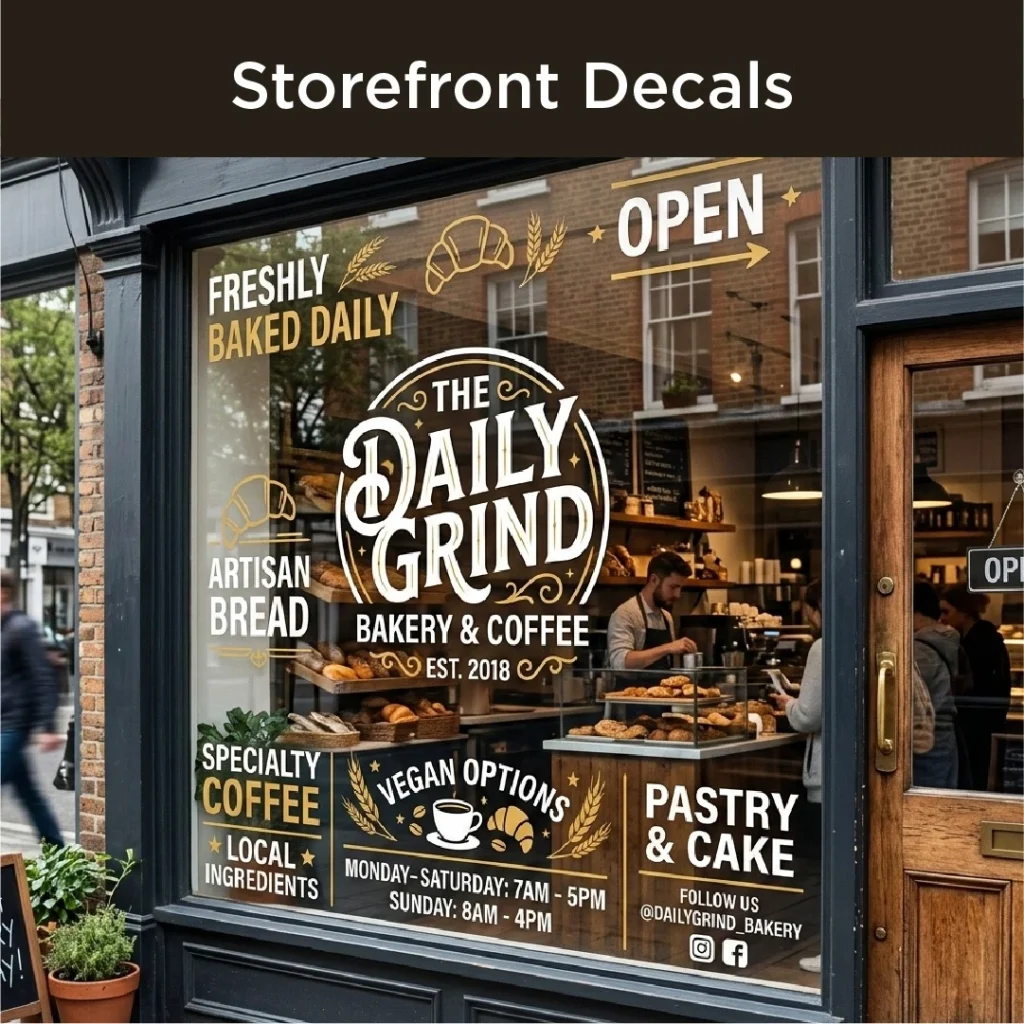
Storefront glass decals and window graphics are effective in drawing attention, supplying information, and enhancing the appearance of a store or business. The ability to use the available window space allows a business to convey offers, brand identity, and other critical information at the point of customer decision to enter a store. Well-formulated graphics improve visibility, simplify decision-making, and enhance the overall customer experience.
Learning Storefront Glass Decals and Window Graphics
Storefront glass decals are visual advertisements that are adhesive and placed on glass surfaces, such as windows and doors. They serve multiple functions, including branding, advertising, and customer education. Decals are available in sizes ranging from small stickers to full-window coverage. They are typically made from strong vinyl material that can be used indoors or outdoors and can be removed if needed.
Window graphics, such as window clings and decals, are similar tools used to adhere to glass surfaces. They can be permanent or temporary and can be applied to the inside or outside of windows. They can be customized in shape, color, and messaging depending on the design and may provide privacy or decorative effects.
Storefront and Window Graphics
There are several types and uses of window and storefront graphics:
- Clear Window Graphics: Transparent designs that convey messages without filling the entire window.
- Opaque Window Graphics: Block sunlight or provide complete window messaging and privacy.
- Perforated Window Decals: Provide one-sided visibility with small holes, appearing solid from the outside while allowing visibility from the inside.
- Frosted Decals: Transparent glass-like graphics with etched designs and sometimes incorporated messaging.
- Lettering: Vinyl or plastic cutouts used for branding, sales, or wayfinding.
- Temporary Static Clings: Non-adhesive graphics used for temporary promotional or seasonal displays.
Benefits of Storefront Glass Decals
Improved Entry-Level Visibility
Most customers decide whether to enter a store within a few seconds of seeing it. Properly placed decals inform pedestrians about deals, promotions, or branding directly, increasing the likelihood of entry. Direct and concise communication minimizes confusion and encourages action.
Supporting Quick Decision-Making
During periods of high foot traffic, customers process information quickly. Decals and clings communicate essential details in a short period, making them ideal for seasonal promotions or time-sensitive offers.
Knowledge of Offers and Information
Decals can display:
- Discounts and promotions
- Product launches
- Event-based or seasonal campaigns
They can also provide useful details such as opening hours, services offered, and contact numbers, enabling customers to make informed decisions before entering the store.
Versatility Across Locations
Decals are not limited to storefronts. Graphics can also be displayed on vehicles and office spaces, extending brand messaging and visibility to additional touchpoints.
The Art of Effective Window Graphics
Clarity and Simplicity
Effective window decals feature minimal designs and concise text. Large fonts, contrasting colors, and limited content improve readability at a distance. Excessive detail can make graphics less effective.
Consistency
Decals should align with the overall branding of the business, including colors, fonts, and style. Consistent design increases recognition and builds trust.
Selection of Colors and Sizes
Colors should contrast with the background for visibility. Bright or white colors often provide the best clarity on glass surfaces. Text size should correspond to the viewing distance:
- 2 feet – 5 pt
- 5 feet – 13 pt
- 10 feet – 25 pt
- 50 feet – 125 pt
Placement Strategy
Consider placement to maximize visibility. Graphics at eye level attract more attention. Larger decals can fill windows for maximum impact, while smaller graphics emphasize specific information or promotions.
Application and Maintenance
- Installation: Clean the surface, place the decal, and press out air bubbles. Adhesive decals can be installed using application fluid for accurate positioning.
- Maintenance: Clean decals manually with mild soap or glass-friendly chemicals. Avoid power washers to prevent damage.
- Storage: Static clings can last several years when stored flat in a cool, dry area with protective paper.
Contextual Window Graphic Messaging
- Retail Windows: Use high-contrast promotional graphics, product imagery, and seasonal advertising.
- Office Windows: Display branding, contact details, hours, and privacy graphics that complement building aesthetics.
- Venues: Promote events or reinforce brand identity with visuals and text.
- Vehicles: Perforated graphics provide full coverage without obstructing driver visibility. Logos, promotional messages, or pricing information can also be applied to vehicles.
Best Practices for Window Graphic Design
- Purpose: Ensure all design decisions align with the graphic’s goal, whether it is selling a product, conveying service information, or reinforcing brand identity.
- Type of Decal: Select the appropriate type—cling, adhesive, perforated, or frosted—based on location and duration requirements.
- Colors: Use high-contrast combinations to increase visibility. Brand colors are important but should be adjusted for legibility.
- Size: Images and fonts should be proportional to the window and readable from the intended distance.
- Customer Traffic: Consider foot traffic speed. Use concise messaging in busy areas and more detailed graphics in slower zones.
- Readability: Place decals in well-lit locations and use easily readable fonts visible from varying distances.
Conclusion
Storefront glass decals and window graphics provide a durable, versatile, and efficient method of communicating with customers, promoting branding, and sharing essential information. When designed with clarity, simplicity, and visibility in mind, they attract attention, facilitate faster decision-making, and enhance the overall customer experience. Their flexibility allows use across retail stores, offices, venues, and vehicles, making them a valuable investment for any business.
FAQs
- What is the purpose of storefront glass decals?
They communicate brand identity, promotions, product information, and essential store details on glass surfaces. - What types of window graphics are available?
Clear, opaque, perforated, frosted, lettering, adhesive decals, and static clings. - Are decals reusable?
Static clings can be reused if stored properly, while adhesive vinyl decals are long-lasting but typically not reusable. - How should window decals be maintained?
Clean by hand using mild soap or glass-safe chemicals. Avoid power washing to prevent damage. - What is the correct size and placement for window graphics?
Consider viewing distance, eye-level positioning, window size, and foot traffic pace to maximize visibility and effectiveness.