Deprecated: Non-canonical cast (double) is deprecated, use the (float) cast instead in /home/decalsdepot/public_html/wp-content/plugins/easy-table-of-contents/includes/vendor/ultimate-web-scraper/tag_filter.php on line 2922
Deprecated: Non-canonical cast (double) is deprecated, use the (float) cast instead in /home/decalsdepot/public_html/wp-content/plugins/easy-table-of-contents/includes/vendor/ultimate-web-scraper/tag_filter.php on line 2926
Deprecated: Non-canonical cast (double) is deprecated, use the (float) cast instead in /home/decalsdepot/public_html/wp-content/plugins/easy-table-of-contents/includes/vendor/ultimate-web-scraper/tag_filter.php on line 2927
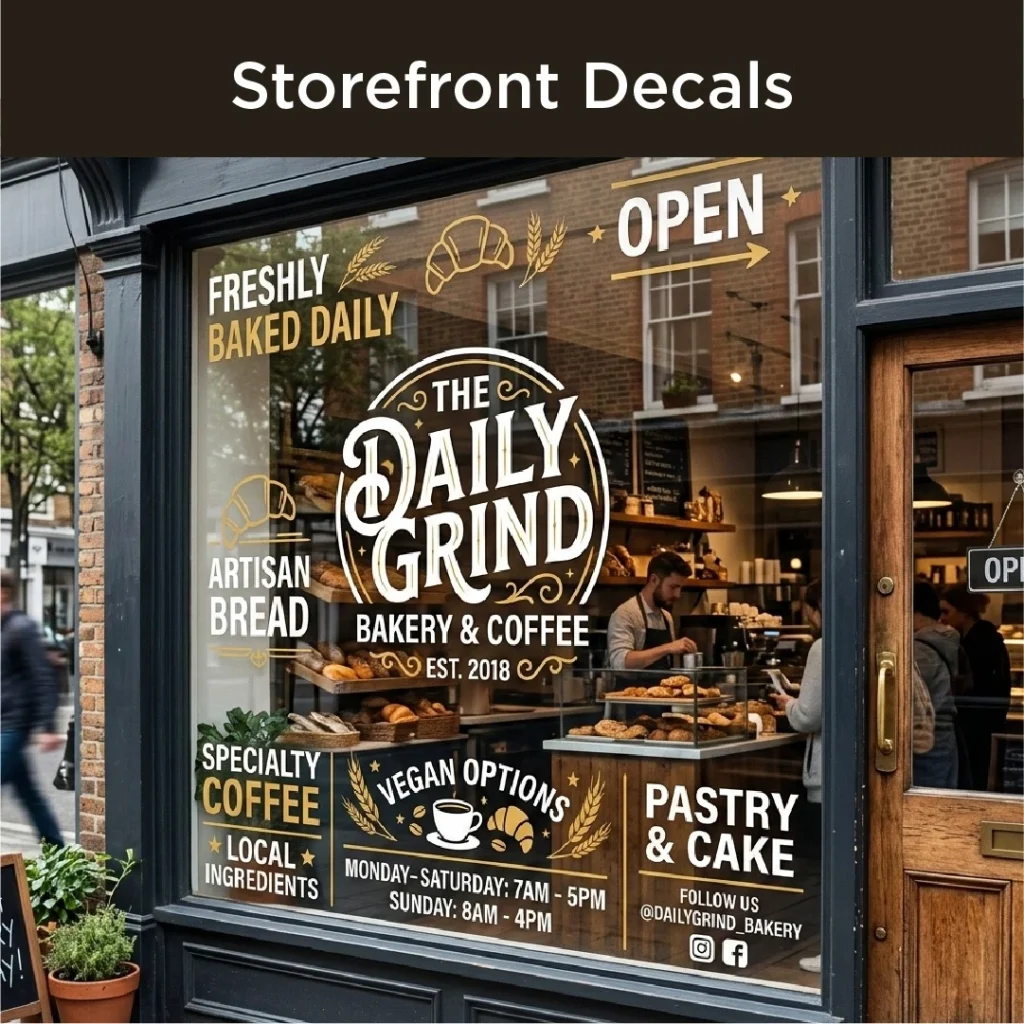
Storefront windows are the most visible aspect of any commercial property, but they are commonly not utilized. Decals and graphics on windows convert ordinary glass into a working communication medium that is used to show branding, promotions and other vital information to pedestrians and motorists. Durable vinyl material and clear visual messages can help businesses to enhance visibility, strengthen their identity, and build a more professional storefront without making permanent structural adjustments.
What are Storefront Window graphics and decals?
Storefront window graphics are graphics, made of vinyl, that are painted onto glass surfaces like windows, doors, and interior partitions. They can be logos, lettering, images, patterns or complete window displays. Cut or printed vinyl is normally used to create these graphics.
Cut vinyl decals are made of separate letters, numbers or shapes that are cut out of solid-color material. Full-color pictures and detailed designs can be printed onto vinyl decals. Both can be attached firmly to the surface of glass but can be detached when necessary without leaving any scratches.
Reasons why businesses use window graphics
Continuous Visibility
The graphics on the windows are on display during both the day and night without any repetitive expenses. They offer a consistent and permanent presence in the visual environment as opposed to digital advertising or temporary posters.
Effective Utilization of Available Space
The building structure already has storefront windows. The use of graphics makes this space a dynamic communication medium without the need to install more signage structures.
Flexibility in Message Changing
The vinyl graphics may be updated or changed to display seasonal campaigns, product launches, or changes in operations. This flexibility enables business to remain relevant without undergoing a major overhaul.
Some of the main advantages of Storefront Window Graphics
Greater Brand Recognition
Putting the names of businesses, logos, and colors on the storefront windows can create familiarity among individuals who pass by the place on a regular basis. Brand recall and trust are reinforced with repetition.
Improved Foot Traffic
Colorful displays can be used to attract pedestrians to look at a storefront more attentively. Spontaneous visits can be affected by clear communication regarding products, services, or offers.
Effective Information Communication
Opening hours, contact information, payment options, and descriptions of services can be placed on window decals. Displaying this information on the surface will minimize confusion and enable customers to make fast decisions.
Added Privacy and still not lost light
Frosted or perforated vinyl also enables businesses to be private in addition to letting natural light in. This comes in handy especially in offices, clinics and service-oriented businesses.
Cost Efficiency
Relative to the large lighted signs or repeated advertising slots, window graphics can be invested in at once and can work several years when well maintained.
Typical Window graphics
Clear Decals
The transparent vinyl is clear, and the design is printed on a transparent sheet, which makes it look like the design is floating on the glass and is visible through the window.
Opaque Decals
Opaque decals are made of solid white decal and are totally opaque. They can be used when bold branding is needed or to cover areas that require privacy.
Frosted Vinyl Graphics
Frost film forms an opaque film that looks like cut glass. It is widely applied in office settings to strike a balance between privacy and a sleek look.
Perforated Vinyl Graphics
Perforated vinyl is a type of material with tiny holes that provide a one-way visibility effect. Individuals within can view external, and the exterior presents a complete graphic image.
Static Clings
No adhesive is needed to keep the static clings in place and they can be removed and reused. They are frequently employed in temporary promotions and seasonal exhibits.
The role of Window Graphics in Customer Behavior
Visual communication is very important in the way individuals view a business. Before a customer even steps into a store, a well-designed and clean storefront communicates professionalism and organization. A graphic placed in a strategic location can make a shop stand out on busy streets where people only have a few seconds to look at a shop and then move on to the next one that looks much like it.
Big graphics and large fonts especially work well in highly-trafficed pedestrian or vehicular routes. They assist businesses to spread the word about what they offer without having customers pause and seek information.
Design tips to successful window graphics
High Contrast to Read
Good contrast of the text and background enhances the visibility over a distance. This matters to customers who are passing by either on foot or in a car.
Keep Messaging Simple
One clear message is more understandable than a number of competing elements. Cluttered designs tend to diminish the effect and clarity of the display.
Eye Level Position Graphics
By putting significant information in the natural line of sight, there is a high possibility of the passersby noticing it.
Maintain Brand Consistency
Consistent fonts, colors, and logos used in storefront graphics and other materials aid in brand recognition and provide the store with a cohesive appearance.
Uses in Various Industries
Retail Stores
Certainly, window graphics are commonly employed by retail-based businesses to market seasonal sales, new product lines, or loyalty programs. Big pictures may be used to capture attention in busy shopping centers.
Restaurants and Cafes
Images of foods, menus, and hours of operation on windows make customers know what is available before they go in. The graphics also help create the overall mood of the establishment.
Professional Offices
Minimal or frosted designs are also popular in law firms, financial services, and consulting agencies and are associated with professionalism and discretion.
Medical and Healthcare Services
Window graphics are used in clinics, dental offices, and fitness studios to achieve a balance between privacy and friendly design and to present clear information about services.
Educational and Community Organizations
Window graphics are used by schools, training centers, and nonprofit organizations to convey schedules, programs, and public information to visitors.
Imaginative and Practical Applications of Window Graphics
Branding and advertising are not the only uses of window graphics. They may also be used as directional signs, where customers find their way to entrances or service desks. Decals are used in multi-tenant buildings to distinguish between particular offices and prevent confusion.
Interactive features like QR codes can bridge the gap between physical storefronts and digital content, where customers can view menus, make appointments, or product catalogs on their phones.
Another practical use is seasonal designs. The graphics can be updated over holidays or other local events to keep the storefront looking fresh and active all year round.
Lifespan and Maintenance
The quality of material and exposure to the environment determine the longevity of window graphics. Interior graphics tend to have longer life than exterior graphics as they are shielded against weather and ultraviolet rays.
Regular cleaning with a soft cloth and light solution should be done. Vinyl can be damaged by abrasive tools or high-pressure washing and have a shorter service life.
Common Mistakes to Avoid
Overcrowded Designs
Excessive text or graphics can complicate the reading of a storefront. Clearly defined layouts work better.
Low-Quality Materials
Poor quality vinyl can peel, fade, or bubble and this can adversely impact the professional look of a business.
Ignoring Local Regulations
The percentage of window coverage that is permitted to be used as signage is controlled in some cities. Prior to installation, it is good to check local rules to prevent compliance problems.
Conclusion
Decals and graphics in storefront windows offer an effective way to enhance visibility, deliver information, and strengthen brand recognition. They enable businesses to utilize the available glass surfaces as communication tools with flexibility to update the messages with time. When made to look appealing and fitted with durable materials, the graphics on the windows are an aesthetic addition as well as a long-term working tool. Companies that need to enhance their presence on the street level should take a moment to review their existing storefront and determine areas where a visual message can be better utilized to enhance customer interaction and accessibility.
Frequently Asked Questions
Q#1. How do window decals differ with window graphics?
Smaller individual components like lettering or logos are often referred to as window decals, whereas window graphics can be a complete window design or a large printed image.
Q#2. Do window graphics work with temporary promotions?
Yes. Removable vinyl and static clings enable companies to post temporary promotions and take them down without leaving behind a trace.
Q#3. Are window decals harmful to the surface of glass?
Vinyl materials used in the profession are made to stick but can be removed. They normally leave no residue and damage when removed accordingly.
Q#4. What is the duration of storefront window graphics?
Exterior graphics have a life span of one to three years with exposure and interior graphics may last several years longer.
Q#5. Do window graphics prevent natural light?
Opaque vinyl does not allow light to pass through, whereas frosted and perforated materials do not prevent light entry and can be used to offer privacy or visual communication.