Deprecated: Non-canonical cast (double) is deprecated, use the (float) cast instead in /home/decalsdepot/public_html/wp-content/plugins/easy-table-of-contents/includes/vendor/ultimate-web-scraper/tag_filter.php on line 2922
Deprecated: Non-canonical cast (double) is deprecated, use the (float) cast instead in /home/decalsdepot/public_html/wp-content/plugins/easy-table-of-contents/includes/vendor/ultimate-web-scraper/tag_filter.php on line 2926
Deprecated: Non-canonical cast (double) is deprecated, use the (float) cast instead in /home/decalsdepot/public_html/wp-content/plugins/easy-table-of-contents/includes/vendor/ultimate-web-scraper/tag_filter.php on line 2927
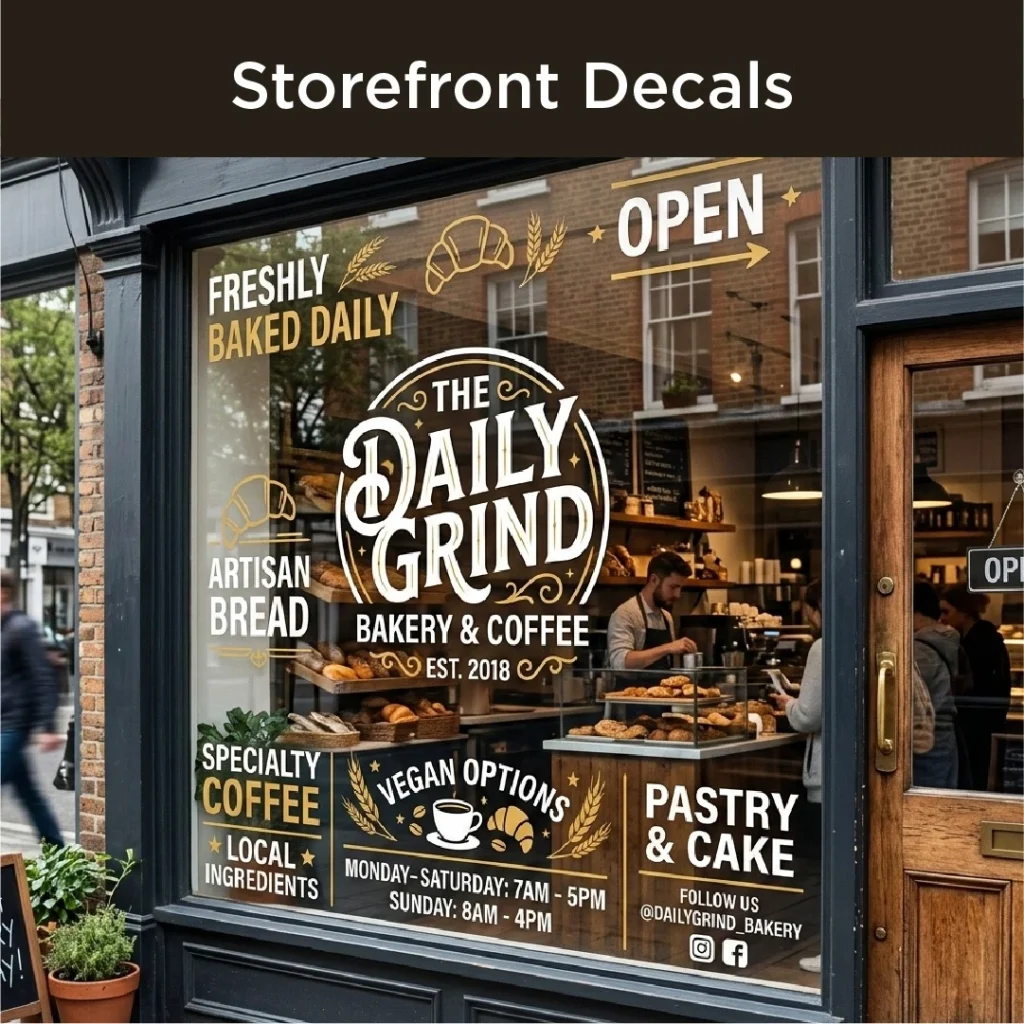
Storefront decals can be considered one of the most viable methods by which businesses can be able to carry out branding, operating information, and promotional messages on the windows and doors. The most effective storefront signage in restaurants, boutiques and offices tends to consist of hardy vinyl lettering, privacy graphics with a frost, and window decals which are weather resistant and can be seen in a few years. These decals turn the blank window space into an informative visual image that will enable customers to locate a business, its services and operating hours within a short period of time. The storefront decals offer a versatile signage option to most kinds of business settings since they are simple to install and remove.
It is a guide to the most popular types of decals, their usage, and the ways in which various businesses apply them to enhance the visibility and communication of their storefronts.
Knowledge of Storefront Decals
Storefront decals are stickers that are created using flexible vinyl material, which can be stuck on glass, metal, painted walls, or smooth surfaces. They are used by businesses to show logos, store hours, promotional graphics or informational messages.
Decals on the windows may be in the form of lettering, pictures or entire window graphics. There are those that are intended to be used permanently outside and those that are temporary and can be removed. Due to the sticking qualities of vinyl on smooth surfaces, decals typically do not need many installation devices and can be removed in many cases without leaving a trace on the surface underneath.
Storefront decals are used by many businesses to transform the blank window spaces into useful communication areas that offer useful information to the customers before they enter the store.
Storefront decals: the best types
Various decal styles are used for different purposes. The selection of the appropriate type will be determined by the business environment and the information being presented.
High-Performance Cast Vinyl
Cast vinyl decals are characterized by their performance and durability outdoors. This material is able to withstand weather conditions like sunshine, rain and temperature fluctuations. Cast vinyl decals of high quality may last up to a few years without fading or peeling.
Permanent logos, branding graphics and long-term window lettering are often done using cast vinyl by businesses.
Vinyl Lettering
One of the commonest storefront decal styles is the vinyl lettering. It is made of cut letters that are placed on glass or other materials on a one-on-one basis. Vinyl lettering is usually used to put up business names, business hours, contact information, or even plain advertisements.
The style produces a clean and professional look since the letters are the only visible things with no background content.
Window Graphics
Larger printed decals can be window graphics and can be as simple as an image, logo, or color, or they can be extensively designed. The graphics may be part or the entire length of a storefront window, and are commonly employed to display promotional messages or visual branding.
Window graphics are very common in retail stores and restaurants to draw attention to new products or seasonal themes.
Window Clings
Clings on windows are adhesive free. They instead use the help of the static electricity to stay put. Due to their simplicity in removing and replacing, window clings can be utilized to make temporary promotions or seasonal announcements.
This kind of decal is effective in short term displays which are changed often.
Frosted Vinyl
Vinyl decals are frosted to form a glass surface that is translucent. This material enables light to pass through it, and visibility is minimized on the outside. Privacy in offices, conference rooms or reception areas of businesses are usually done using frosted vinyl.
Logos or decorative patterns may also be used in frosted designs and make glass partitions look more professional.
Best Storefront Decals by Type of Business
Storefront decals are applied differently in various industries based on the interaction with customers and layout of the stores.
Cafes and Restaurants
Business hours, menu highlights, or branding are also frequently depicted through window decals at restaurants. Vinyl lettering is good in working hours and contact information.
Another type of window film that is used in restaurants is perforated. This material enables the occupants of the building to look out and also show printed graphics on the outside surface.
Boutiques and Retail Stores
Storefront decals are also used to support visual branding in boutiques. The store name can be displayed in a unique font that portrays the brand image using custom vinyl lettering.
Removable decals are also used in retail stores to promote a season, launch a product or even holiday displays. These interim graphics enable the store owners to change the outlook of the store without substituting the permanent signage.
Offices and Professional Services
Frosted vinyl decals are common on glass doors or internal partitions in offices. This solution offers privacy to meeting rooms at the same time giving it a clean and modern appearance.
Logo decals can also be displayed on the front windows or doors to the offices to make the business recognizable in the case of professional offices.
Factors to consider When selecting storefront decals
The choice of the appropriate storefront decal is subject to a number of practical considerations.
Visibility
Readability is significantly influenced by color contrast. Vinyl lettering is typically light colored and should be used on dark or colored glass. Dark writing is more visible on light backgrounds.
Daring designs assist passerby and motorists in recognizing the business in a short time.
Material Quality
Storefront decals are also durable depending on the material. Cast vinyl is not very perishable compared to other types of vinyl and it does not fail in the outdoor environment. When well maintained, some of the decals can last a few years.
Another material that can be used is calendered vinyl, which is applicable to flat surfaces and with shorter term usage.
Installation Method
Surface preparation is significant in the right installation of decals. Vinyl graphics should be applied to clean windows that have dust or grease and those that have residues of cleaning agents.
Masking tape can be applied by installers to form a hinge that allows the positioning of decals accurately before the final placement.
Placement
Storefront decals may be placed on the inside or on the outside of the glass. Decals mounted indoors are better shielded against the weather and vandalism. External decals can be more visible based on the weather and the tint of the glass.
Storefront Decals In the Larger Signage System
Storefront decals are not the only component of a larger signage strategy employed by businesses to get in touch with customers.
Outdoor Signage
Outdoor signs assist companies to capture attention and direct their customers to them. Examples are channel letter signs, monument signs, pylon signs and awning signs. The primary business name or brand identity is frequently exhibited in these signs.
Indoor Signage
The interior signs will help the customers after they have entered the building. Directional signs, wall graphics, and lobby signs guide visitors in the area and inform them about the services.
Promotional Signage
Promotional signage concentrates on short-term marketing communications like sales promotions, seasonal deals or new products. These purposes are usually done through window decals and banners.
Digital Signage
Online displays enable companies to show moving images like videos or rotating advertisements. Digital menu boards and LED displays are typical examples that are used in retail and restaurant settings.
Vehicle Signage
Car graphics make company cars and delivery vehicles mobile billboards. Vinyl decals and wraps may contain business logos and contact information and move around a city with the vehicle.
Storefront Vinyl Decals are to be maintained
Vinyl window decals can be made to last longer by proper maintenance.
The use of mild soap and water to clean the storefront windows eliminates dirt and dust that can be deposited on the decal surface. Chemicals that are harsh or cleaning tools that are abrasive should not be used since they can destroy printed graphics.
In case a decal is worn out or fades away, it is often possible to replace it without damaging the surface of the underlying window.
Summary
Storefront decals offer an easy and efficient means of business to present branding, business information and promotional messages on windows and doors. The most common ones are vinyl lettering, cast vinyl graphics, window clings, and frosted privacy decals. Restaurants tend to utilize decals to indicate operating hours and menu specials, boutiques to visually brand and seasonally display, and offices to provide privacy and professional appearance.
In selecting storefront decals, businesses ought to think about visibility, the quality of the material used, the method used in installation and the location. Storefront decals could last many years with proper maintenance and careful design.
Frequently Asked Questions
Q#1. What is the purpose of storefront decals?
Storefront decals are applied to windows or doors to display business names, logos, operating hours, promotion messages and decorative graphics.
Q#2. What is the life of vinyl storefront decals?
Good quality vinyl decals used in the outdoors can take several years based on the environment and care.
Q#3. Is it possible to take off storefront decals without breaking the window?
Yes. The majority of vinyl decals are removable through a slow peeling process of the material off the surface. It is possible to clean any left adhesive with the help of suitable solutions.
Q#4. Are in-store decals appropriate when making temporary promotions?
Yes. Short term promotions like seasonal sales or special events are usually done using removable decals and window clings.
Q#5. So where do you put the vinyl decals other than on the store windows?
The vinyl decals may also be used on glass doors and interior walls as well as vehicles and other smooth surfaces utilized in a business setting.