
Deprecated: Non-canonical cast (double) is deprecated, use the (float) cast instead in /home/decalsdepot/public_html/wp-content/plugins/easy-table-of-contents/includes/vendor/ultimate-web-scraper/tag_filter.php on line 2922
Deprecated: Non-canonical cast (double) is deprecated, use the (float) cast instead in /home/decalsdepot/public_html/wp-content/plugins/easy-table-of-contents/includes/vendor/ultimate-web-scraper/tag_filter.php on line 2926
Deprecated: Non-canonical cast (double) is deprecated, use the (float) cast instead in /home/decalsdepot/public_html/wp-content/plugins/easy-table-of-contents/includes/vendor/ultimate-web-scraper/tag_filter.php on line 2927
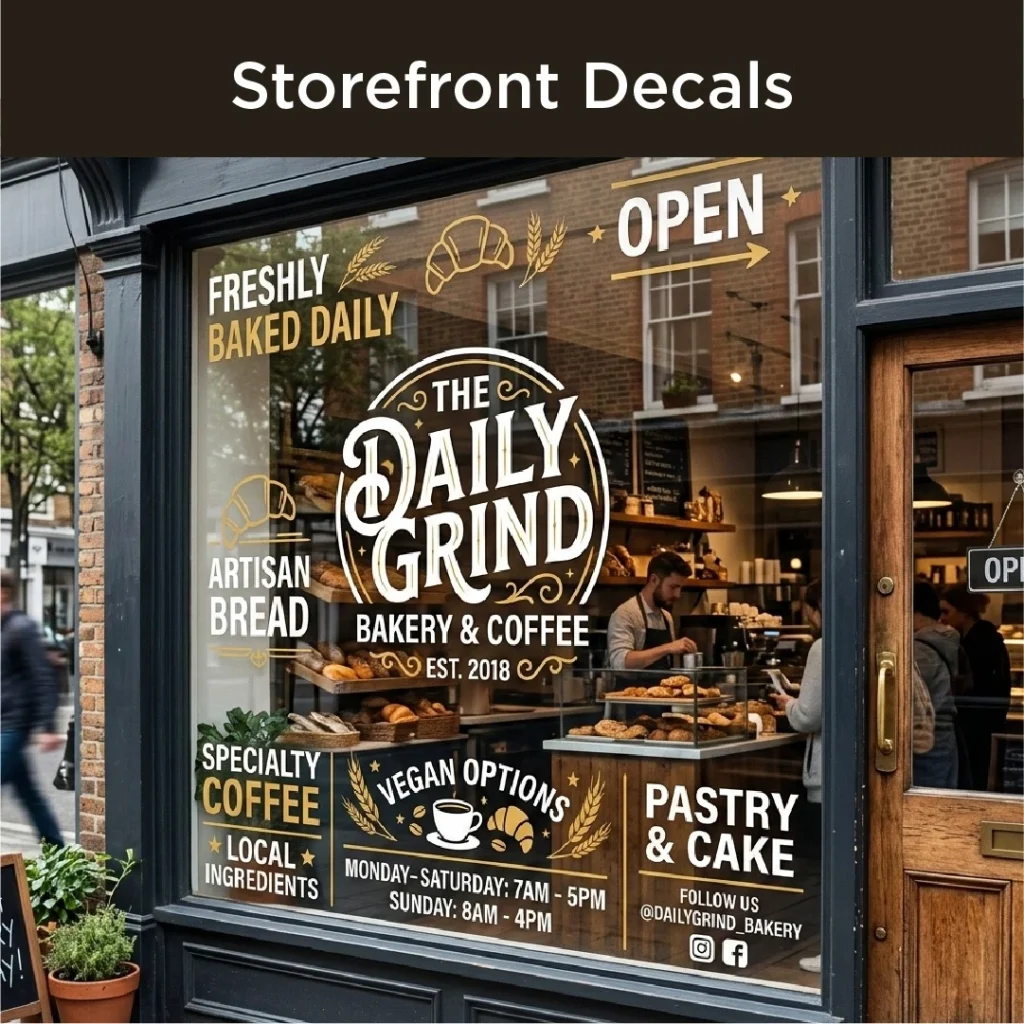
Storefront window decals are popular business tools that are used to place branding, business information, and decoration on glass surfaces. They make regular windows a window communication tool that is eye-catching and contains valuable information like opening hours of the stores, logos, or offers. Offices and homes that require privacy, decoration, or control of light also have window decals.
Glass surfaces provide a large area on which to write messages without having to change the structure. This is why window decals have become one of the most viable solutions for storefront communication. Nevertheless, there are numerous varieties of decals, and the selection of the appropriate one is determined by durability, visibility, privacy, and conditions of installation. Knowledge of the various forms of window decals assists businesses in choosing the best one to use at the front or inside of the store.
Vinyl Window Decals
The most popular material used in window decals is vinyl. When individuals talk of window stickers, they are usually referring to vinyl decals. Vinyl decals are created using a flexible plastic film that is meant to be applied on the surface of glass. They present printed graphics clearly and are stable in various environmental conditions.
Standard Vinyl Decals
Indoor windows or short-term signage are usually done using standard vinyl decals. They usually come with a white background enabling colors to appear vivid and clear. They are commonly used by businesses to display store hours, basic branding, or temporary announcements.
Outdoor-Grade Vinyl Decals
Outdoor-grade vinyl decals are designed to resist weather conditions. They are resistant to sunlight, moisture, and temperature changes. The strong adhesive ensures they stick to glass over a long time. They are usually applied to storefront branding and exterior windows due to their durability.
Clear Window Decals
Clear window decals are printed on transparent vinyl material. The design is not placed on a solid background but directly on the glass surface itself.
Transparent Designs
Only the printed parts of the decal are visible, giving the impression that the design is a part of the glass itself. Minimal branding or logos are commonly done in clear decals.
Storefront Applications
Clear decals are used in retail stores and cafes to display logos or store hours without obstructing the view inside. This keeps a transparent and open look while still conveying brand identity.
Frosted Window Decals
Frosted window decals resemble a sandblasted or etched glass look. They also provide privacy while allowing natural light to pass through.
Privacy Applications
Frosted film is commonly applied in offices, meeting rooms, clinics, and bathrooms, where privacy is important but natural light is still desired.
Decorative Designs
Frosted vinyl may also be shaped into patterns or designs. Clear areas of the glass can be left exposed to create contrast between frosted and transparent areas. It can also include logos and text.
Static Cling Window Decals
Static cling decals do not use adhesive. Instead, they rely on static electricity to cling to the glass surface.
Non-Adhesive Material
Since they do not use glue, static cling decals can be applied, removed, and repositioned easily.
Temporary Displays
They are usually used for seasonal sales, temporary promotions, or short-term displays. They leave no residue and can be reused if stored properly.
Perforated Window Decals
Perforated window decals feature small holes throughout the vinyl.
One-Way Vision
From the outside, the graphic appears solid. People inside can see through the glass while the exterior displays the full design.
Storefront and Vehicle Use
These decals are commonly applied to storefront windows and rear windows of vehicles. They allow businesses to display large graphics without completely obscuring interior light or view.
UV DTF Window Decals
UV DTF decals are produced using ultraviolet printing. The design is printed on a film and then transferred to the glass surface.
Durable Construction
UV printing creates a hard ink layer that cannot be scratched, damaged by moisture, or easily handled. This makes these decals suitable for high-traffic areas like glass doors or shop windows.
Strong Color Appearance
The thick ink layer produces a slightly raised texture with intense color saturation, ensuring designs remain vibrant even on clear or dark glass.
Die-Cut Window Decals
Die-cut decals are cut to match the shape of the design rather than being printed on a rectangular background.
Custom Shapes
The cutting removes excess material around the design. Logos, letters, or symbols appear clean and sharp when applied to glass.
Branding Applications
Company logos, storefront lettering, or decorative branding elements are commonly created using die-cut decals.
Removable Window Decals
Removable decals use adhesive that sticks firmly but is easy to remove.
Temporary Installations
These decals are suitable for promotional campaigns that last a few weeks or months.
Clean Removal
When peeled off correctly, they leave minimal adhesive behind and protect the glass surface.
Etched Glass Vinyl
Etched glass vinyl resembles frosted film but often has a darker tone or slight texture, similar to natural sandblasted glass.
Professional Appearance
Etched vinyl is commonly applied in corporate offices, hotels, and reception areas for an elegant appearance.
Long-Term Decoration
This semi-permanent material can be installed for long-term use and withstands regular cleaning.
Large Window Wraps
Large window wraps cover an entire glass surface from edge to edge.
Full Window Graphics
They transform a shopfront window into a large visual communication area for brand messages or advertisements.
Privacy and Promotion
These wraps can provide privacy while simultaneously displaying promotional graphics to the public.
Choosing the Right Window Decal
Selecting the appropriate decal depends on the purpose, location, and desired durability.
- Clear decals maintain visibility through the window.
- Opaque decals enhance contrast and readability.
- Frosted decals provide privacy while allowing light.
- Static clings are suitable for temporary displays.
- Perforated film enables advertising without blocking interior view.
The duration the decal is expected to remain in place is also an important consideration. Temporary promotions may require removable material, whereas long-term storefront branding is best served by durable vinyl or perforated film.
FAQs
What are the most popular forms of window decals?
The most popular types include vinyl decals, clear decals, frosted decals, static cling decals, perforated window film, and die-cut decals.
What is the best window decal to use in stores?
Outdoor-grade vinyl and perforated window decals are most suitable for storefronts, as they are durable and visible from a distance.
Are static cling decals reusable?
Yes, static cling decals can be reused if placed on their original backing and kept clean.
Which window decals provide privacy?
Frosted window decals and etched glass vinyl offer privacy while allowing light to pass through.
Are vinyl window decals durable?
High-quality vinyl decals can last three to seven years depending on exposure to weather and proper maintenance.