Deprecated: Non-canonical cast (double) is deprecated, use the (float) cast instead in /home/decalsdepot/public_html/wp-content/plugins/easy-table-of-contents/includes/vendor/ultimate-web-scraper/tag_filter.php on line 2922
Deprecated: Non-canonical cast (double) is deprecated, use the (float) cast instead in /home/decalsdepot/public_html/wp-content/plugins/easy-table-of-contents/includes/vendor/ultimate-web-scraper/tag_filter.php on line 2926
Deprecated: Non-canonical cast (double) is deprecated, use the (float) cast instead in /home/decalsdepot/public_html/wp-content/plugins/easy-table-of-contents/includes/vendor/ultimate-web-scraper/tag_filter.php on line 2927
Retail store signage and decals on the front of the store have a quantifiable effect on customer attraction, in-store navigation, and buying choices. Research findings indicate that 76 percent of consumers have entered a store due to the signage that caught their attention, and almost 79 percent of consumers think that signage is a display of the quality of a business. To retailers in the U.S., storefront decals and interior signage should be designed well beyond being a decorative flourish. They are workable instruments in that they define customer experience, enhance brand identity and even sales performance.
The importance of Storefront Decals and Retail Signage
Retail signage undertakes a number of vital roles. It recognizes the business, conveys services and eliminates confusion among the first-time visitors. Obvious exterior signage will enable the customers to find a store easily and this is a very important aspect considering that 77 percent of consumers have been found complaining that they are unable to find a business because of poor signage.
Purchasing behavior is also affected by signage. Over three-quarters of consumers report that they have purchased a product due to signage, and two out of five shoppers have impulse purchases, and a significant number of them are influenced by displays and promotional signs. Good signage therefore facilitates both the planned and unplanned sales.
Retail has witnessed a lot of growth in digital signage. Retail (25 percent) and restaurant (94 percent) were the most common digital signage installations in 2023, and 94 percent of retail businesses said they used some type of digital display. It is known that digital signs attract significantly more views compared to the standstill displays and have been linked to repeat visits.
Storefront Signs of Retail Business
There are various exterior signage alternatives available to retailers, and each of them is specific to a location and objective.
Storefront Signs
The major sign over the entrance is used to identify the name of the business and the business logo. These signs can be in form of channel letters, dimensional letters, cabinet or lightbox signs or illuminated panels. It is to be clear and visible at a distance. The size of letters must be related to the distance of viewing, one inch of letter height to every ten feet of visibility.
Window Decals and Graphics
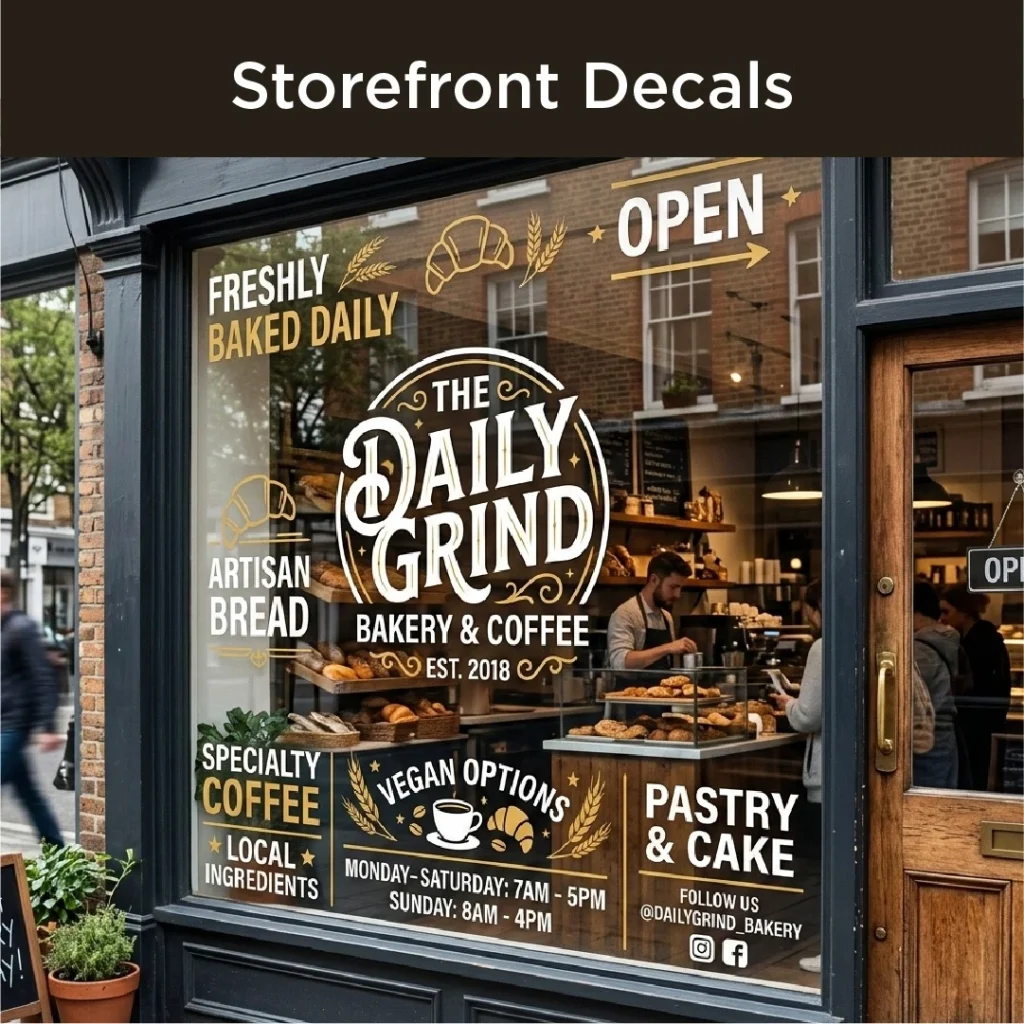
Window decals are vinyl graphics that are put on a direct surface of glass. They usually show the store timings, contact information or advertisements. Vinyl is very strong and weather resistant; hence it is used extensively in exterior applications. The graphics of windows are cheap and adaptable, they can be updated seasonally without updating the structure.
A-Frame and Sidewalk Signs
A-frame signs that are not attached to any building are positioned in the vicinity of the entrances to attract the attention of pedestrians. They can be employed in daily specials or temporary announcements. Their success is determined by their location and adherence to the local municipal codes.
Awning Signs
Awnings are spread over doors or windows and can have printed business names. They offer shading as well as strengthening the brand visibility. This format is usually made of fabric and vinyl.
Monument and Blade Signs
Monument signs are buildings erected on the ground, located close to the roads or entrances, and are typically found in shopping centers. Blade signs are developed perpendicular to the building facade and are especially efficient in places with high pedestrian traffic.
Banners and Temporary Signs
Vinyl banners are best used in temporary promotions or when opening up a business or a sale period. They are permanent but used temporarily.
Interior Retail Signage
After customers get into the store, there is interior signage that helps in the navigation and the decisions made to purchase.
Directional and Wayfinding Signs
Directional signs decrease the shopping friction. There are overhead department signs, arrows to checkout counters, floor signs that direct traffic, which enhance efficiency and comfort of the customers.
Point-of-Sale Signage
One of the most useful places where to put signs is the checkout area. Limited offers or displays that point out the add-on products can be used to increase average transaction value.
Informational Signs
Informational signs describe the product features, materials, sourcing, or instructions on how to take care of them. Explain things clearly, and trust and lower the returns.
Promotional Displays
The use of posters, shelf talkers, and standing banners highlights discounts or temporary offers. These signs need to be concise and visually unique.
Digital and LED Displays
Electronic screens enable stores to refresh messages and change promotions fast. LED lamps are energy saving and have long life time as compared to the conventional fluorescent systems.
Storefront Decals and Signage materials
The choice of the correct materials influences durability and the look.
Vinyl is popular in decals and banners because it is flexible and weather resistant. Acrylic gives an interior signage a smooth and polished appearance. Exterior signs can be made of aluminum and other metals. Temporary displays can be done using PVC boards and corrugated plastic which are cheap. Wood can be utilized due to aesthetic purposes, however, it needs maintenance.
The type of material must be based on exposure conditions and anticipated life. Outside signs should not be affected by moisture, sunlight, and temperatures.
Illumination Options
Lighting enhances visibility in the dark. LED systems are also energy saving and less maintenance is needed as compared to older technologies. Neon lighting gives a unique glow yet it can be more expensive to maintain. Internal lighting is used on translucent faces behind cabinet signs. Dimensional letters may be lit with External spotlights and have no internal wiring.
The right option will be determined by the budget, maintenance capacity, and appearance.
Principles of Designing Retail Signage that works
Good design makes it easier to read and understand.
Layout and Hierarchy
The first and most important information must be presented in the largest type. Smaller details should include secondary ones like dates or conditions. The spacing is sufficient to avoid congestion.
Typography
The fonts should be readable even at a distance. Clearness is commonly achieved by using simple sans-serif typefaces. The use of a limited number of font styles is coherent.
Color and Contrast
The readability is enhanced by high contrast between the text and the background. Light text on a dark background or dark text on a light background is usually effective. Brand colors can be employed but must not make it less clear.
Accessibility
Signs must be accessible in terms of font size and contrast. In other places, the ADA has been extended to interior wayfinding and permanent signs. In different communities, multilingual signage can be suitable.
Touring Local Regulations and Permits
The U.S. cities control the size of signs, height, light and positioning. The retailers should check the local sign codes prior to installation. Permanent outdoor signs can also be subject to permits and design. Non-compliance may lead to fines or removal orders.
The coordination with the local planning departments will prevent delays. Laws might differ across the cities, and this is of particular importance to retailers with more than one location.
Best Practices in Placement
The position of signs must be at average eye level, about 57 to 63 inches off the floor when placed inside the building. At decision points like entrances and intersection of aisles, directional signs must be used. The number of messages should not be overcrowded because too many messages are ineffective.
Outside features should not be blocked by landscaping or architectural features.
Conclusion
Retail signage and storefront decals are both useful and quantifiable in retail settings in the United States. They are attention grabbing, identify who you are, direct traffic and affect buying behaviors. To have good signage, it must be well designed, use appropriate materials, have the right light source, and adhere to the local laws. The retailers that treat the signage as an operational tool and not an after-thought can enhance visibility and customer experience.
The second thing is to assess current signage. Measure readability, condition, position, and conformity. Determine areas of weakness in terms of directional clarity or emphasis on promotion. The attentive changes can lead to significant changes in traffic and sales.
Frequently Asked Questions
What are storefront decals in retail stores?
Storefront decals are business names, business hours, promotions and brand elements that are written on windows or glass surfaces. They enhance visibility and relay the necessary information to pedestrians.
Which material should be used as outdoor retail signage?
Outdoor signage is normally done using vinyl and aluminum because of the resistance to weather and durability. The optimum material is based on exposure factors and the desired life cycle.
Should stores be required to have permits to place storefront signs?
In the majority of American cities, permanent exterior signs are permitted. Rules differ in each municipality and therefore retailers are advised to seek advice of the local planning departments prior to installation.
What size should a storefront sign be?
Letter height is usually in accordance with the one inch to ten feet of sight rule. The size should also be in accordance with the local sign codes.
Do digital signs work in retailing?
Digital signage is extensively used in retail and is flexible in updating messages. Studies show that digital displays are much more appealing than the ones that are not moving and can contribute to returning to the facility.